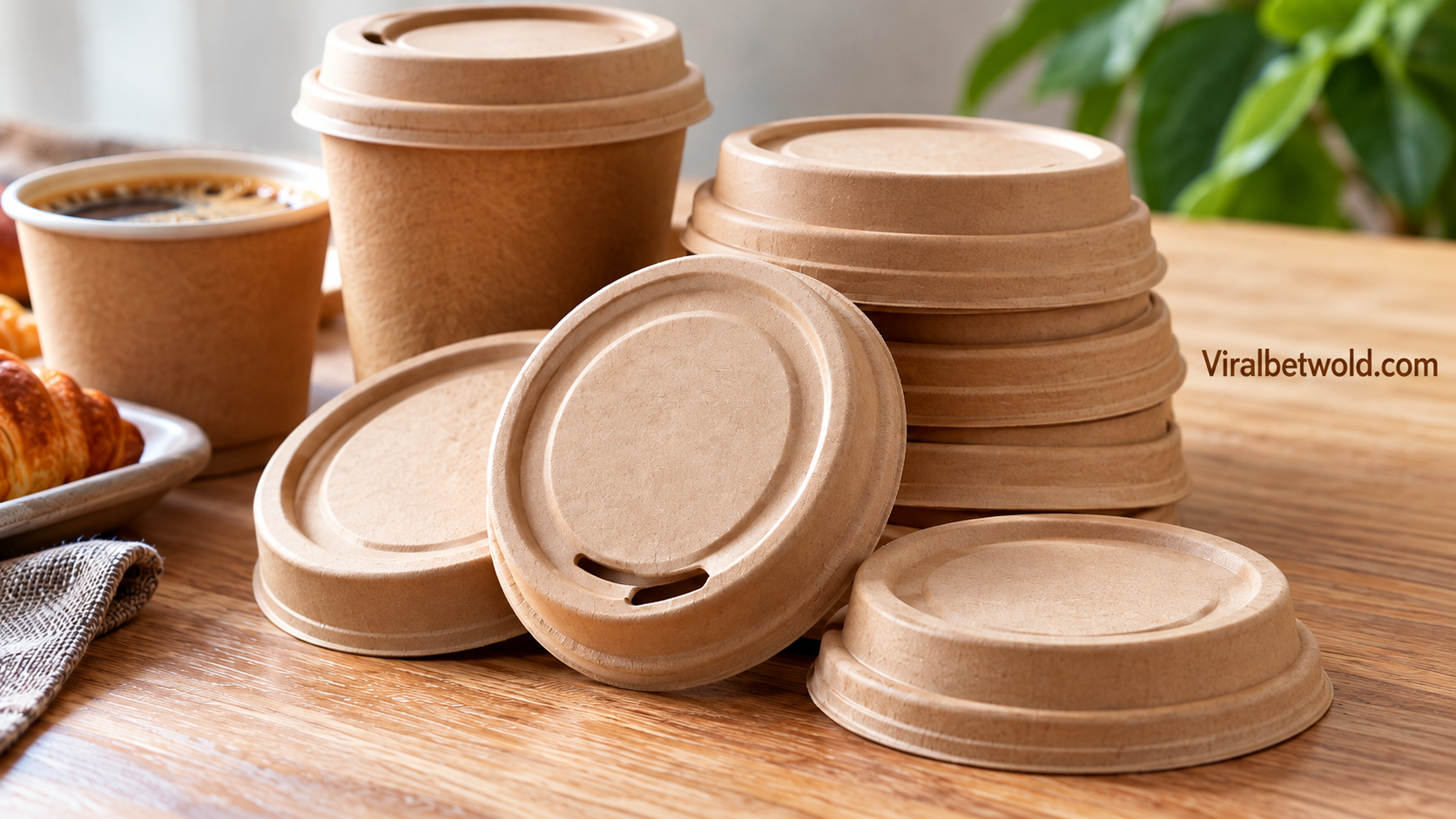
A pappedeckel is a German term commonly used to refer to a cardboard lid, paperboard cover, or flat cardboard piece used to cover, protect, or support products. Depending on the context, it can refer to a container lid, a protective insert in packaging, or a small piece of cardboard used in everyday applications. The exact meaning depends on the product and how the term is used.
Pappedeckel products are valued for their practical design, lightweight construction, and versatility. They can be used in food and beverage settings, shipping, storage, crafts, and industrial packaging. When made from suitable paper-based materials, they may also fit into recycling systems, although their environmental impact depends on coatings, adhesives, contamination, and local recycling facilities.
Understanding the different types of Pappedeckel, their common applications, and their sustainability considerations can help individuals and businesses choose the right option for their needs.
What Is Pappedeckel?
The word Pappedeckel combines the German word Pappe, which refers to cardboard or a thick paper-based material, with Deckel, meaning lid or cover. In practical use, the term can refer to a cardboard cover or lid, although the specific product may vary by manufacturer and context.
Unlike a rigid plastic or metal lid, a cardboard cover is generally made from paper fibers that are pressed or processed into a sheet or a shaped component. Its thickness, strength, flexibility, and surface finish depend on the material and manufacturing method.
Some versions are simple, flat pieces of cardboard, while others are cut, folded, coated, or shaped to fit a particular container. Certain products are designed for disposable use, whereas others may be suitable for repeated use if they remain clean and structurally sound.
The most important consideration is the intended application. A cardboard cover for a storage box, for example, does not necessarily have the moisture resistance or food-contact suitability required for a hot beverage container.
Common Uses of Pappedeckel
Pappedeckel products serve several purposes across households, businesses, and manufacturing environments. Their usefulness comes from their simple construction and ability to be produced in different sizes and shapes.
Food and Beverage Packaging
One recognizable application is in food and beverage packaging. Paperboard lids and covers can be designed for cups, takeaway containers, and other disposable food-service products.
Their suitability depends on the specific design. A lid intended for cold food may perform differently from one intended for hot drinks. Moisture resistance, heat tolerance, fit, and food-contact compliance are important factors when selecting a product.
Not every cardboard lid is suitable for direct contact with food or liquids. Some products use coatings or other materials to improve performance, and these can affect recyclability.
Shipping and Product Protection
Cardboard covers are also useful in packaging and shipping. They can close open boxes, protect exposed surfaces, separate items, or provide an additional layer between a product and external contact.
In some packaging designs, a flat cardboard insert helps prevent products from shifting during transportation. However, a simple cover should not be treated as a substitute for structural packaging when a product requires substantial impact protection.
Businesses can choose different thicknesses and shapes according to the weight, dimensions, and fragility of the items being packed.
Household Storage
In homes, cardboard lids are commonly used with storage boxes and organizers. They help keep stored items together, reduce dust exposure, and make containers easier to stack when the overall box design supports stacking.
They can also be useful for organizing documents, craft supplies, seasonal decorations, and other lightweight belongings.
Because ordinary cardboard can absorb moisture and lose strength, it is generally better suited to dry storage than to damp environments.
Arts, Crafts, and DIY Projects
Pappedeckel materials can be used in creative projects because they are relatively easy to cut, fold, paint, and decorate with suitable tools and materials.
Common applications include:
- Handmade box covers and organizers
- School and educational projects
- Model-making and decorative displays
- Scrapbooking and paper crafts
- Templates and protective work surfaces
The appropriate material thickness depends on the project. Thin cardboard is easier to cut and shape, while thicker board may provide better rigidity.
Industrial and Commercial Packaging
Manufacturers and distributors may use cardboard covers as components in larger packaging systems. They can serve as separators, protective sheets, covers, or inserts for products that need to remain organized during handling and storage.
In commercial settings, standardized dimensions can simplify packing processes and reduce the need to cut individual pieces by hand. Custom-made versions may also be produced to fit specific containers or packaging designs.
Types of Pappedeckel
Pappedeckel products are available in different forms depending on their intended use, required strength, and manufacturing process. The following categories describe common types of cardboard covers and related paperboard components rather than a single standardized product classification.
1. Plain Cardboard Covers
Plain cardboard covers are simple, flat pieces made from paper-based board. They are often used to cover boxes, separate items, protect surfaces, and support household organization.
Their main advantages are simplicity and versatility. They can also be cut to fit different dimensions, making them suitable for basic packaging and DIY projects.
However, untreated cardboard offers limited protection against moisture and is not necessarily suitable for applications requiring a tight seal.
2. Corrugated Cardboard Covers
Corrugated cardboard contains a fluted layer between flat liner sheets. This construction can provide greater rigidity and cushioning than a comparable flat sheet of ordinary paperboard.
Corrugated materials are commonly used in shipping boxes and protective packaging. Covers made from them can help protect packaged goods during storage and transportation.
The level of protection depends on the board’s construction, thickness, and dimensions, as well as the cover’s use.
3. Paperboard Container Lids
Paperboard lids are designed to fit particular containers, such as selected food-service cups, trays, or packaging boxes. They may feature cut edges, folds, tabs, or other design elements that help them fit securely.
Some are intended for single use, while others may be designed for specific reusable systems. Their performance depends on the intended contents, temperature, and moisture exposure.
Food-contact suitability should always be confirmed with the manufacturer.
4. Coated Cardboard Covers
Coated cardboard covers have an additional surface layer intended to improve properties such as moisture resistance, appearance, or grease resistance.
The coating may be made from different materials, so the term does not automatically mean that a product is waterproof or recyclable through ordinary paper collection.
When choosing a coated option, buyers should check the manufacturer’s specifications and local waste-disposal guidance.
5. Custom-Cut Cardboard Inserts and Covers
Custom-cut products are manufactured to match a particular size, shape, or packaging requirement. They can include circular covers, rectangular inserts, shaped dividers, and components made for specific containers.
Custom designs can help businesses reduce unnecessary movement inside packages and simplify assembly. They are particularly useful when standard sizes do not provide the required fit.
Benefits of Pappedeckel
The practical value of a cardboard cover depends on its design and application. Nevertheless, several characteristics make paper-based covers useful across different settings.
Lightweight and Easy to Handle
Most cardboard covers are relatively lightweight compared with many metal or rigid plastic alternatives. This can make them convenient to transport, store, cut, and assemble.
For businesses that use large quantities of packaging components, ease of handling can also simplify packing operations.
Versatile Design Options
Cardboard can be cut, folded, printed, and shaped into many forms. Manufacturers can adjust the thickness and dimensions to meet particular packaging needs.
This flexibility allows cardboard covers to serve different purposes, from simple dust protection to structured packaging components.
Potential Cost Advantages
Simple cardboard covers can be economical when manufactured in standard sizes and purchased in suitable quantities. Their actual cost depends on the material grade, order volume, printing, coatings, customization, and shipping.
For this reason, cardboard is not automatically the cheapest option for every application. Buyers should compare the total cost of products that meet their performance requirements.
Convenient Storage
Flat cardboard components often require relatively little storage space before assembly. This can be useful for businesses that purchase packaging supplies in bulk.
Some covers can also be recycled after use, depending on their material composition and local collection rules.
Compatibility With Paper-Based Packaging
Cardboard covers can be incorporated into packaging systems made primarily from paper and board. Using compatible materials may simplify sorting and recycling compared with packaging made from several difficult-to-separate materials.
However, compatibility depends on the entire packaging design, including adhesives, coatings, labels, and any attached plastic components.
Pappedeckel and Sustainability
Sustainability is an important consideration when selecting packaging materials. Cardboard is made primarily from paper fibers, but its environmental performance depends on how those fibers are sourced, how the product is manufactured, how long it is used, and what happens to it after disposal.
The European Commission identifies recyclability and improved packaging-waste management as important parts of its packaging policy. Its packaging rules began applying on August 12, 2026, with requirements and implementation timelines varying by provision.
Is Pappedeckel Recyclable?
Many plain cardboard and paperboard products can be recycled through appropriate paper-recovery systems. However, not every product is accepted in every local recycling program.
Factors that may affect recyclability include:
- Plastic or other non-paper coatings
- Wax or grease-resistant treatments
- Adhesives and attached components
- Heavy food contamination
- Local collection and sorting capabilities
A clean, uncoated cardboard cover is generally a more straightforward candidate for paper recycling than a heavily contaminated or multilayer product. The correct disposal method should still be checked against local guidance.
Recycled Materials and Responsible Sourcing
Some cardboard products are manufactured using recovered paper fibers, while others use a combination of recycled and newly produced fibers.
Using recycled content can help keep recovered materials in circulation, but it does not by itself establish the overall environmental impact of a product. Manufacturing processes, energy use, transport, durability, and end-of-life handling also matter.
Businesses can ask suppliers about recycled content and whether virgin fibers come from responsibly managed sources. Independent certification may provide additional information about sourcing practices, where applicable.
Reducing Unnecessary Packaging
One practical way to improve packaging efficiency is to use only as much material as the product requires.
Appropriately sized cardboard covers may reduce unnecessary packaging volume and make storage easier. However, reducing material should not compromise product protection or create additional damage and waste during shipping.
Packaging should be designed to balance material efficiency with the protection needed for its intended purpose.
Food Safety and Environmental Considerations
Cardboard intended for food contact must meet the applicable requirements for its intended use. In the European Union, food-contact materials are subject to rules designed to prevent substances from transferring into food at levels that could endanger health or adversely affect food quality.
A product being made from paper does not automatically make it suitable for direct contact with food. This is particularly important for hot beverages, oily foods, and moist products.
Likewise, a performance-enhancing coating may affect recycling options. Manufacturers should provide clear information about both food-contact suitability and appropriate disposal.
Pappedeckel vs. Plastic Lids
Cardboard and plastic lids serve overlapping purposes, but their properties differ. The right choice depends on the product being covered and the conditions in which it will be used.
| Feature | Cardboard or paperboard lid | Plastic lid |
|---|---|---|
| Weight | Usually lightweight | Usually lightweight |
| Moisture resistance | Depends on coating and construction | Often good, depending on plastic type and design |
| Rigidity | Varies by board thickness | Varies by plastic type and shape |
| Customization | Can be cut, folded, and printed | Can be molded and shaped |
| Recycling | Depends on fibers, coatings, contamination, and local facilities | Depends on plastic type, design, and local facilities |
| Food-contact use | Requires suitable materials and manufacturing | Requires suitable materials and manufacturing |
Neither material is automatically the more sustainable choice in every situation. A fair comparison considers material quantities, manufacturing, transportation, product protection, reuse potential, and the actual waste-management system available.
For dry packaging and simple covers, paperboard may be a practical option. For applications requiring substantial moisture resistance or a particular closure design, a suitable plastic alternative may perform better.
How to Choose the Right Pappedeckel
Selecting a suitable cardboard cover requires more than checking its size. The material should match the intended use and the conditions it will experience.
Consider the Purpose
Start by identifying what the cover needs to do. A lid for a storage box may only need to keep dust away, while a packaging component may need to prevent movement or protect a product during transport.
The more demanding the application, the more important it becomes to check the material’s specifications.
Check Size and Fit
Measure the container or opening carefully. Consider the dimensions, edge shape, and whether the cover needs tabs, folds, or another fastening feature.
A poorly fitted lid may slide off, fail to protect the contents, or create problems during handling.
Evaluate Thickness and Strength
Thin paperboard may work well for lightweight products and simple covers. Heavier board or corrugated construction may be more appropriate when additional stiffness is needed.
If the cover will carry a load or form part of a protective package, request performance information from the supplier instead of relying on thickness alone.
Review Moisture and Temperature Requirements
Ordinary cardboard can soften or lose strength when exposed to water. Products used around liquids, hot drinks, or damp goods require specific materials designed for those conditions.
For food-service applications, verify the product’s permitted temperature range and intended use.
Ask About Material Composition
Check whether the cover contains coatings, adhesives, inks, plastic components, or other treatments. This information helps determine whether the product meets your performance requirements and can be disposed of appropriately.
For commercial orders, ask the supplier for technical specifications and relevant compliance documentation.
Compare Price and Supply
Compare unit prices alongside order quantities, customization charges, delivery costs, and minimum order requirements.
A standard product may be suitable for a small project, whereas a custom-cut version may be more efficient for repeated commercial use. The best option is the one that meets the requirements at a reasonable overall cost.
Frequently Asked Questions About Pappedeckel
What does Pappedeckel mean in English?
Pappedeckel is a German term that can refer to a cardboard lid, cardboard cover, or similar paperboard component. Its exact translation depends on the context in which it appears.
What is Pappedeckel made of?
It is generally associated with cardboard or paperboard made from processed paper fibers. Specific products may also contain coatings, adhesives, inks, or other materials.
Can Pappedeckel be used for food packaging?
Yes, certain cardboard and paperboard covers are designed for food packaging. The specific product must be suitable for its intended food-contact conditions and comply with the relevant requirements.
Is Pappedeckel environmentally friendly?
It can be a practical packaging choice because many paper-based products are recyclable. However, environmental performance depends on sourcing, production, product design, contamination, and local recycling facilities. The material alone does not guarantee sustainability.
Can cardboard lids protect products during shipping?
Yes, when properly designed, cardboard lids and inserts can cover products, separate items, and provide some protection. Their performance depends on their construction and the level of protection required.
Are all Pappedeckel products waterproof?
No. Ordinary cardboard and paperboard can absorb moisture. Some products use specialized coatings or treatments to improve moisture resistance, but their performance varies.
Can Pappedeckel be reused?
Some cardboard covers can be reused if they remain clean, dry, and structurally sound. Products exposed to moisture, grease, or damage may no longer perform as intended.
Where can businesses buy Pappedeckel?
Businesses can look for packaging manufacturers, paperboard converters, food-service packaging suppliers, and industrial packaging distributors. Before placing a large order, they should confirm dimensions, material composition, minimum quantities, and any relevant safety or compliance requirements.
Conclusion
Pappedeckel is a useful term for cardboard lids, covers, and related paperboard components that serve a variety of packaging, storage, and creative purposes. Depending on the design, these products can offer lightweight construction, convenient handling, flexible customization, and compatibility with paper-based packaging systems.
Choosing the right product involves considering its intended use, dimensions, strength, moisture resistance, and material composition. Sustainability also requires careful evaluation because coatings, contamination, and local recycling arrangements can influence what happens after use.
For households and businesses alike, a well-chosen cardboard cover can be a practical solution when its performance matches the task, and its disposal requirements are understood.