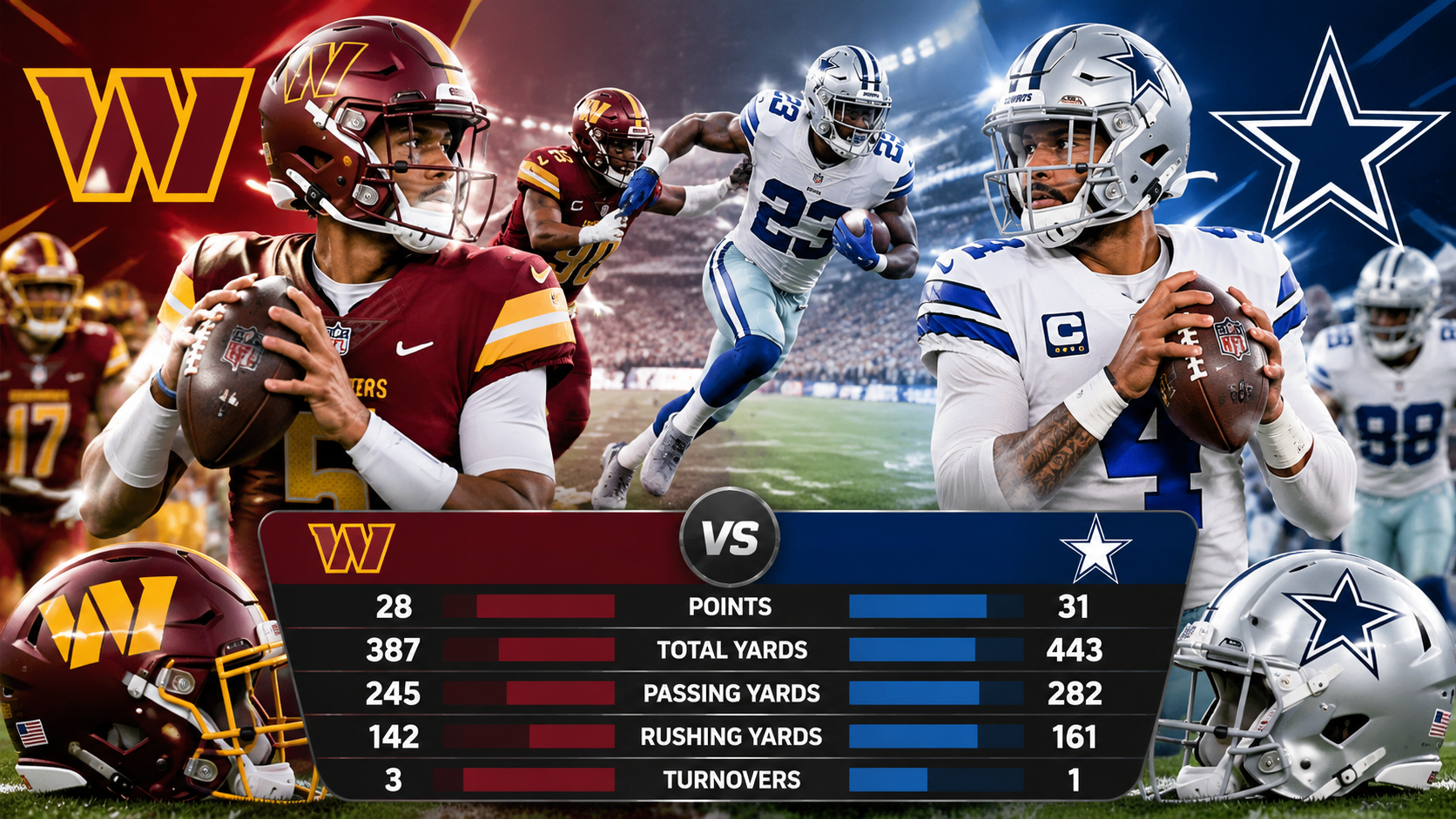
The Washington Commanders vs Dallas Cowboys match player stats provide a detailed look into one of the NFL’s most competitive divisional rivalries. Every meeting between these two NFC East teams brings intense battles, dramatic moments, and individual performances that often decide the final result. The latest matchups have shown how quarterback play, offensive efficiency, defensive pressure, and big-play ability continue to shape the outcome of this historic rivalry.
The Cowboys and Commanders have produced several memorable games in recent seasons, with both teams finding ways to challenge each other. By examining the player statistics, we can understand which athletes made the biggest impact and how their performances influenced the game.
Match Overview and Final Result
The recent Washington Commanders vs Dallas Cowboys matchup highlighted the difference between explosive offense and defensive resilience. Dallas controlled much of the game with efficient drives, strong quarterback execution, and consistent production from key offensive players. Washington showed moments of competitiveness but struggled to maintain momentum throughout all four quarters.
In one of the recent meetings, the Cowboys defeated the Commanders 44-22. Dallas finished with 409 total yards compared with Washington’s 341 yards, showing the Cowboys’ ability to create more consistent offensive production. The Cowboys also controlled possession slightly longer, allowing their offense more opportunities to score.
Another meeting showed a closer contest, with Dallas earning a 30-23 victory. That game demonstrated how both teams could generate offense, but the Cowboys’ ability to create explosive plays helped them secure the win.
Quarterback Performance Analysis
Quarterback performance remains the most important factor in any Washington Commanders vs Dallas Cowboys match player stats breakdown. The quarterback position determines offensive rhythm, scoring opportunities, and the ability to handle pressure situations.
For Dallas, Dak Prescott has continued to be the centerpiece of the offense. His accuracy, experience, and decision-making ability allow the Cowboys to operate efficiently in passing situations. Prescott’s ability to extend drives through accurate throws and smart reads has been one of Dallas’ biggest advantages.
Washington’s quarterback play has also been a major storyline. Jayden Daniels brings a different style with his combination of passing ability and rushing threat. His mobility creates additional challenges for opposing defenses because he can make plays both inside and outside the pocket.
In recent matchups, Daniels showed his ability to contribute through both passing and rushing situations, but Dallas’ defense was often able to limit Washington’s consistency.
Running Back Contributions and Ground Game
The rushing battle often determines the pace of a Commanders vs Cowboys matchup. A successful running game helps control the clock, reduces pressure on quarterbacks, and creates opportunities for play-action passing.
Dallas received strong production from its running backs, including Javonte Williams, who became an important part of the Cowboys’ offensive attack. His ability to gain tough yards and contribute near the goal line gave Dallas balance against Washington’s defense.
Washington’s rushing attack relied on a combination of explosive plays and quarterback mobility. The Commanders used their running backs alongside Daniels’ rushing ability to keep defenses uncertain. However, maintaining consistent yardage against Dallas’ defensive front remained a challenge.
A balanced rushing attack was especially important because both teams have talented pass rushers capable of changing games when opponents become one-dimensional.
Wide Receivers and Passing Game Impact
The wide receiver position produced several important moments during these rivalry games. Big catches, third-down conversions, and deep passes often changed the momentum.
Dallas benefited from having multiple reliable targets who could create separation and make plays after the catch. The Cowboys’ passing attack has frequently focused on spreading the ball among different offensive weapons rather than depending on only one player.
Washington’s receiving group also played a significant role, especially when Daniels had time to throw. The Commanders looked for opportunities to attack downfield and create explosive plays, but Dallas’ secondary worked to limit those opportunities.
In close games, receiver performance becomes even more important because one missed catch or one explosive reception can completely change the final score.
Defensive Standouts and Game-Changing Plays
Defense has always been a major part of the Washington Commanders vs Dallas Cowboys rivalry. Both teams have invested heavily in defensive talent, especially along the defensive line.
Dallas’ defense created problems by generating pressure and forcing difficult decisions from Washington’s offense. Strong pass-rushing performances helped the Cowboys disrupt drives and create opportunities for their offense.
Washington’s defense also produced impressive moments. In one matchup, the Commanders recorded six sacks against Dallas, showing their ability to pressure the quarterback and create negative plays.
Turnovers, sacks, and third-down stops played a major role in deciding these games. While offensive statistics receive most attention, defensive performances often determine which team controls the final result.
Key Individual Performances
Several players stood out when analyzing the complete Washington Commanders vs Dallas Cowboys match player stats.
Dak Prescott was one of the most influential players for Dallas because of his ability to manage the offense and make accurate throws under pressure. His leadership and experience helped the Cowboys maintain offensive consistency.
Javonte Williams also delivered important contributions through the rushing attack. His ability to create scoring opportunities and keep the offense balanced added another dimension to Dallas’ game plan.
For Washington, Jayden Daniels remained a major factor because of his athletic ability and playmaking skills. Even when facing defensive pressure, he showed the ability to create opportunities with both his arm and legs.
Defensive players from both teams also played important roles. Sacks, tackles for loss, and pressure on the quarterback were key statistics that influenced the outcome.
Offensive Efficiency Comparison
Looking deeper into the statistics reveals how efficiency separated the two teams. Dallas often showed stronger consistency in converting drives into points. Their ability to gain yards on early downs helped them avoid difficult third-down situations.
Washington showed flashes of offensive success but struggled when facing pressure situations. Penalties, defensive pressure, and missed opportunities affected their ability to sustain drives.
The Cowboys’ offensive balance between passing and rushing allowed them to control game flow. When Dallas established the run, it created more favorable passing situations and forced Washington’s defense to adjust.
Special Teams Impact
Special teams performances are sometimes overlooked, but they can influence close NFL games. Field position, kicking accuracy, and return ability can provide teams with hidden advantages.
Dallas has benefited from reliable kicking performances, while Washington has also received important contributions from its special teams units.
In rivalry games where teams are closely matched, a successful field goal, strong punt, or important return can become the difference between winning and losing.
Tactical Breakdown of the Match
The tactical battle between the Commanders and Cowboys involved adjustments from both coaching staffs. Dallas focused on maintaining offensive balance and using its playmakers effectively. Washington attempted to create pressure defensively while using Daniels’ athletic ability to generate offense.
The Cowboys’ strategy often involved protecting Prescott, creating favorable matchups, and attacking areas where Washington’s defense showed weaknesses.
Washington’s approach centered around creating explosive plays and using quarterback mobility. When the Commanders were able to move the ball quickly, they became much more dangerous.
What the Statistics Reveal About Both Teams
The Washington Commanders vs Dallas Cowboys match player stats show that successful teams usually combine strong quarterback play, offensive balance, and defensive discipline.
Dallas has shown the ability to win through efficient passing, rushing production, and defensive pressure. Washington has shown potential with young talent and a dynamic quarterback who can change games.
The statistics also reveal that small details matter. Turnovers, penalties, third-down efficiency, and red-zone performance often decide these NFC East battles.
Final Thoughts on Washington Commanders vs Dallas Cowboys Match Player Stats
The Washington Commanders vs Dallas Cowboys match player stats provide a complete picture of how individual performances shape one of the NFL’s most exciting rivalries. From quarterback battles to defensive plays, every statistic tells part of the story.
Dallas’ recent success has come from offensive consistency, experienced leadership, and strong play from key contributors. Washington continues to build around talented young players and remains capable of challenging Dallas in future meetings.
As both teams continue competing in the NFC East, their matchups will remain closely watched because every game brings new standout performances, strategic adjustments, and memorable moments.