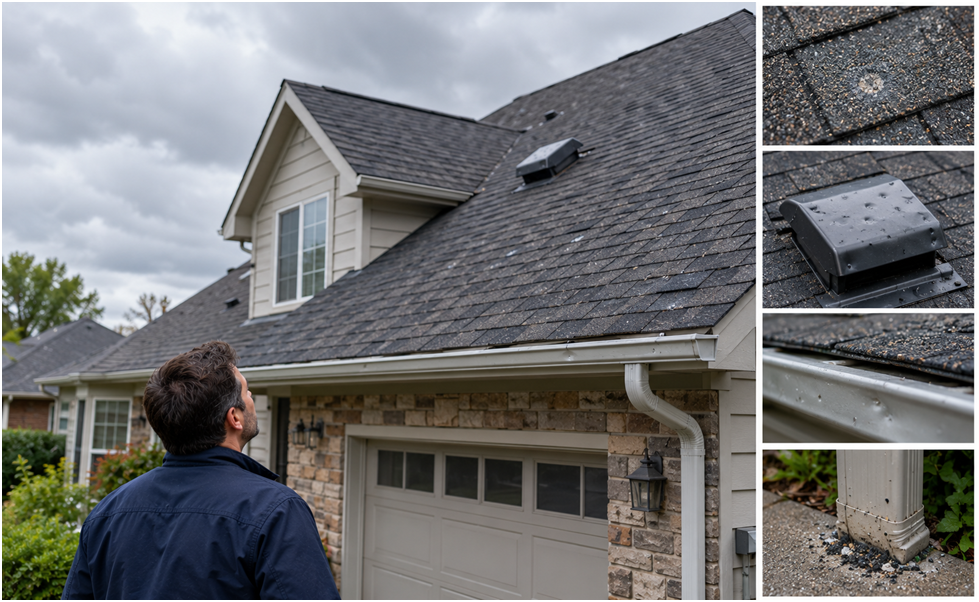
A hailstorm shows up out of nowhere, batters your roof for a quarter of an hour, then clears off like nothing happened. You walk outside afterward. No shingles on the lawn, no obvious cracks, everything where it should be. So you shrug and get on with your day. That’s the trap. A roof can read as totally fine on top while things quietly go sideways underneath. This is why hidden hail damage fools so many homeowners. A snapped branch or a shingle flapping in the wind practically waves at you. A faint dent forty feet up says nothing at all.
Once you know how this damage forms and what to keep an eye out for, you’re in a much better spot to avoid a painful repair bill later. So let’s walk through why hidden hail damage deserves your attention, how you can spot it early, and what to do if you suspect your roof took some punishment.
Why Does Hidden Hail Damage Matter So Much?
Damage that stays out of sight doesn’t stay small. That little bruise on a shingle can grow into an actual leak, and more often than not, freeze-thaw cycles do the dirty work. A bit of water finds a hairline crack, freezes overnight, swells, and nudges the opening wider. Give it a couple of winters and something you never would’ve spotted becomes a proper structural headache.
There’s a financial angle too, and it catches people off guard. Certain manufacturer warranties only honor claims if you flag the damage within a specific stretch of time after the storm. If nobody caught it and that clock ran out, the repair bill can land squarely on you once the trouble finally surfaces.
Water also refuses to stay in its lane. Slip past a damaged shingle, and it keeps going – into the attic, down through walls, straight into your insulation. That’s exactly the kind of damp, dark setting mold and wood rot love. What looked like a purely cosmetic scuff becomes a real concern for anyone living in the house.
How Can You Detect Hidden Hail Damage?
Because hail damage likes to hide in plain sight, being proactive beats waiting around for a drip in the ceiling. One of the most dependable moves is booking a professional roof inspection soon after a big storm, ideally long before things spiral into a full hail damage roof replacement. Inspectors know the quiet warning signs and where they tend to turn up.
You can also poke around yourself. Check your gutters and downspouts for a pile-up of granules. Those tiny grains guard your shingles against UV rays, so finding them gathering below usually points to impact. On the roof, feel for soft spots underfoot and look for odd discoloration or shallow dents that vanish from view once you’re back on the ground.
Shingles aren’t the whole story, either. Skylights, chimneys, and flashing all take a beating, and one small dent up there can turn into a leak. Any inspection worth your time checks those corners, not only the easy stuff.
What Should You Do If You Suspect Hail Damage?
Suspect your roof got hit? Document everything first. Grab photos and video from several angles in decent light. That record supports your insurance claim and gives contractors a real head start before anyone touches a ladder.
Then get on the phone with your insurer and open the claim. Loads of policies cover hail, but the timing genuinely matters, so don’t let it drift. Calling in a certified roofing inspector is a wise follow-up, since you’ll get a clear, thorough read rather than a shrug and a guess.
Last thing: pull quotes from two or three solid local contractors before you commit to anyone. Lining up estimates tells you the true scope and keeps you from paying more than the job’s worth.
Protecting Your Roof Starts with Awareness
Hail damage doesn’t need to be dramatic to hurt your wallet. The subtle version is honestly the one to take most seriously. Book inspections after the big storms, learn the small tells, and you’ll usually catch trouble while it’s still easy and affordable to sort out.